
This case study highlights the important role of quality climate education in providing hope and inspiration amidst the climate crisis.
Country: United Kingdom
CCE Types: Secondary Education, Training
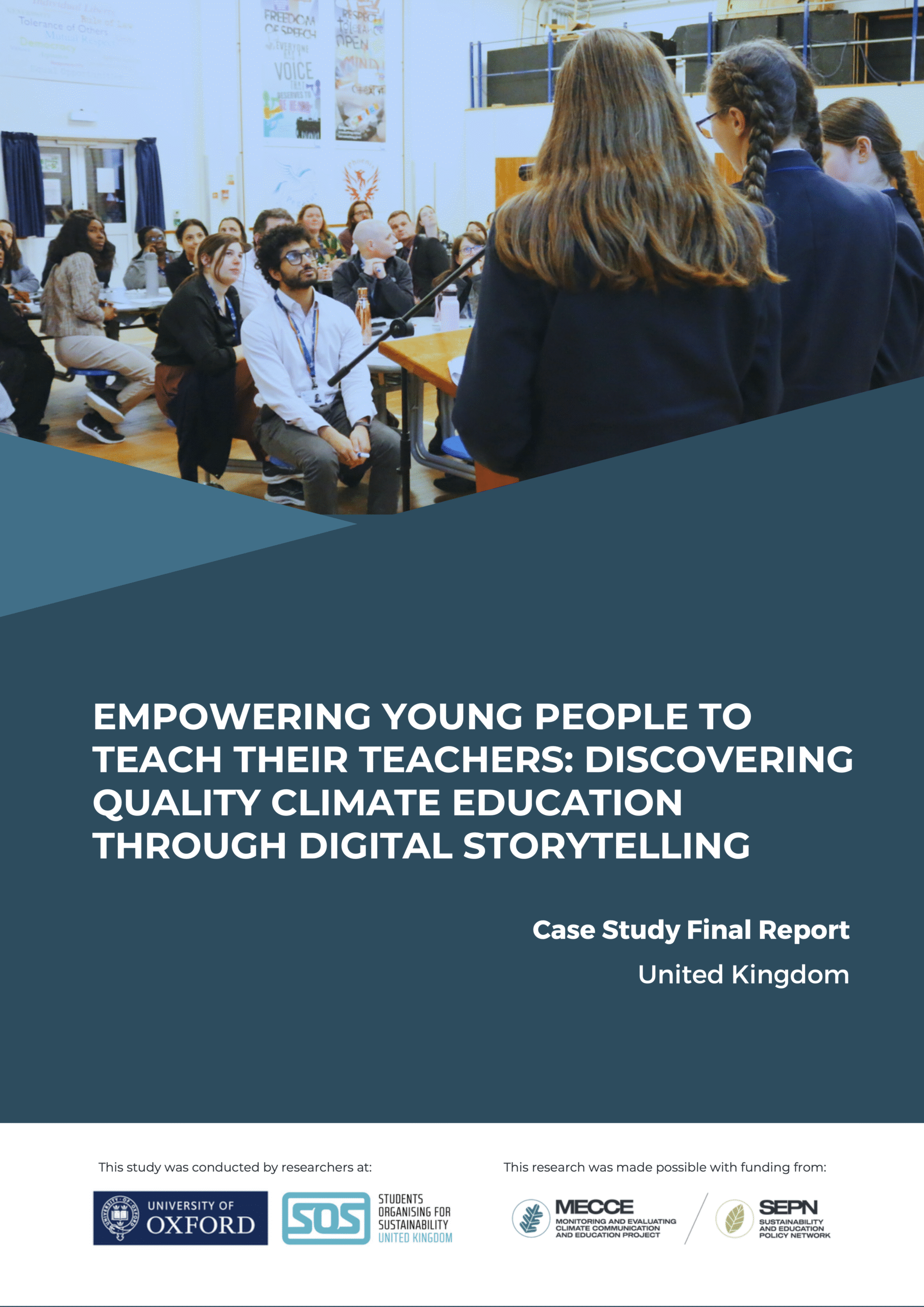
Empowering Young People to Teach their Teachers: Discovering Quality Climate Education Through Digital Storytelling

SOS-UK developed Teach the Teacher to respond to student frustrations that the formal curriculum in the UK neither prepares students to take effective climate action, nor helps them deal with the emotional impacts of living in a changing climate.
The programme is also filling gaps in teacher training, since many teachers do not receive training on how to teach climate change either during or after their teacher certification.
The initiative sees roles reversed, with students running lessons for their teachers to explore climate change, climate justice, and what it is like to be a young person during the climate emergency.
This case study uses digital storytelling to shed light on the fears of young people as they navigate their uncertain futures—and how to empower them to take action.
The research methods used in this case study included interviews, focus group conversations, questionnaires, and digital storytelling to explore the purposes, practices, and outcomes of quality climate education.
Through facilitated digital storytelling workshops, young people involved in Teach the Teacher created short videos that were both speculative (a letter from their future self in 2050) and reflective (their moment of environmental awakening).
In total, 29 students and 7 teachers were involved in this case study research.
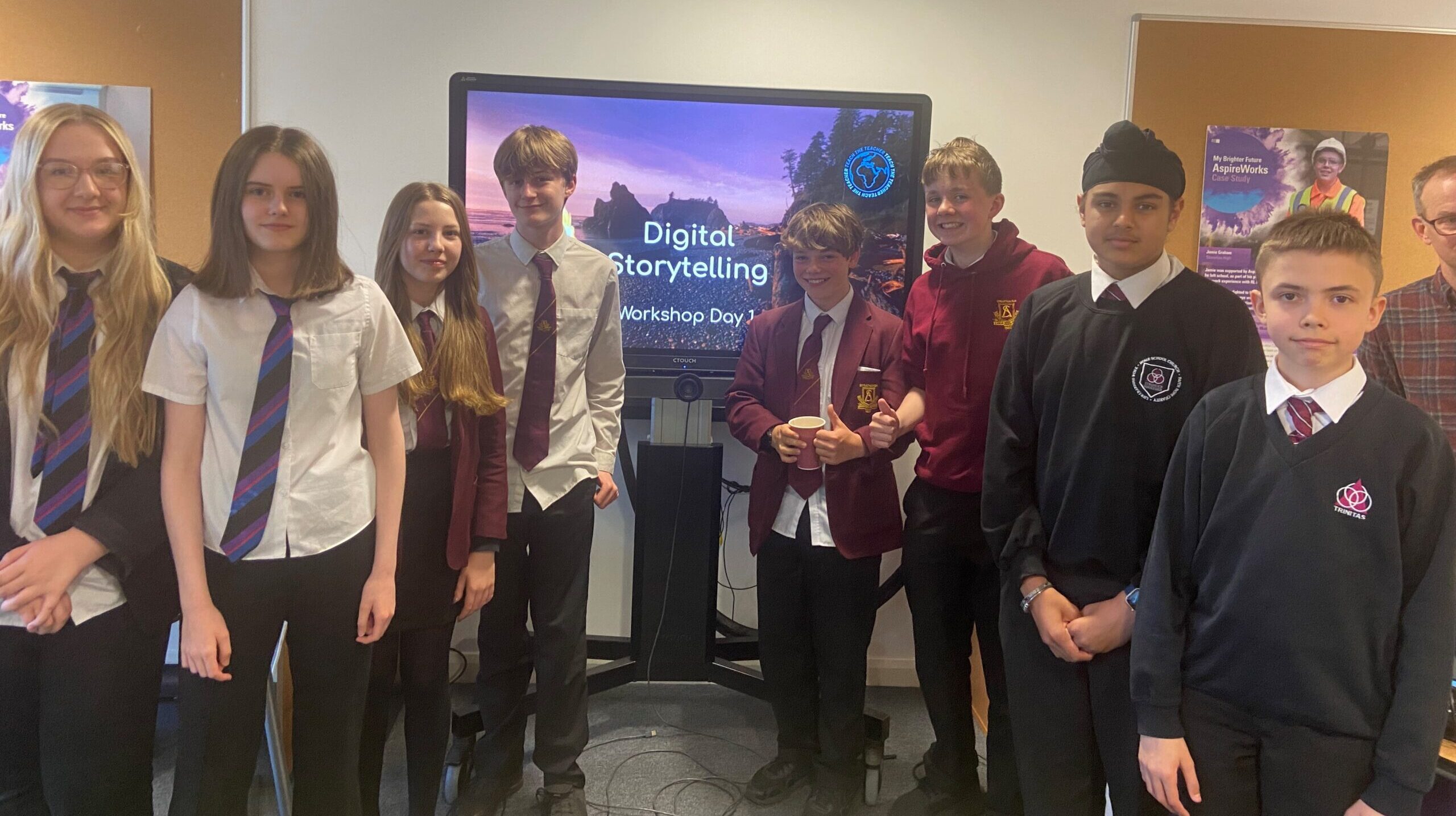
Most of the multimedia letters from the future reflected narratives of collapse and dystopia. These were framed as warnings to the viewer, with an underlying message of contingency based on individual and collective action in the present.
The digital stories also presented futures of growing inequality, in which green technology benefited a privileged few, with increased suffering and vulnerability experienced by the majority.
One video starkly presented a narrative of discontinuity, with a great tragedy leading the way to a new enlightened period characterised by the restoration of nature and transformation of education.
The case study highlights the role of action learning experiences as being key for helping students cope with eco-anxiety and hopelessness. Through the digital storytelling workshops, students shared their reflections on the experiences that shaped them and their environmental awakening. Informal forms of education such as television programmes, social media, participation in activism featured much more prominently in the reflections than did formal education experiences. Formal education experiences mentioned in these videos included extra-curricular activities, such as eco-clubs and school trips, and inspiring teachers.
“I think [teachers] should do [climate education] in more of an interactive way. Rather than just telling us things, we should actually do activities based on it.”
“You can't teach climate education without having that balance of: this is what's happening, this is what we can do. Because, otherwise, you're just showing devastation, with no way to solve it, and that's obviously when you get climate anxiety and paralysis and actually not doing anything.”
Teach the Teacher builds students’ hope and confidence to take climate action, and also improves teacher skills and confidence to teach about climate change.
Because Teach the Teacher empowers students by helping them constructively navigate hierarchies and power structures in their schools, the programme thrives in places where student voice and leadership are actively supported. Similar programmes might face more hurdles in school systems that approach teaching and learning in more hierarchical ways.
Ultimately, while young people need to understand the basics of climate change, they also need hope and inspiration.
The MECCE Project is grateful to researchers at Oxford University and Students Organizing For Sustainability United Kingdom for conducting the case study

WATCH PLACES, COMMUNITIES, STORIES
Quality climate communication and education fosters relationships with places, communities, and stories. Learn more in our popular video.