
The Global Labour University Online Academy (GLU-OA) is equipping workers around the world to take climate action through a highly inclusive, tailored model of ‘spiral learning’ through a free, open access course.
The Just and Green course was developed to support trade unionists in understanding and taking action that addresses the ‘jobs vs. environment’ debate.
Country: Global Scope
CCE Types: Training, Public Participation
Climate Action in the Workplace: A Blended Learning Approach to Trade Union Climate Training
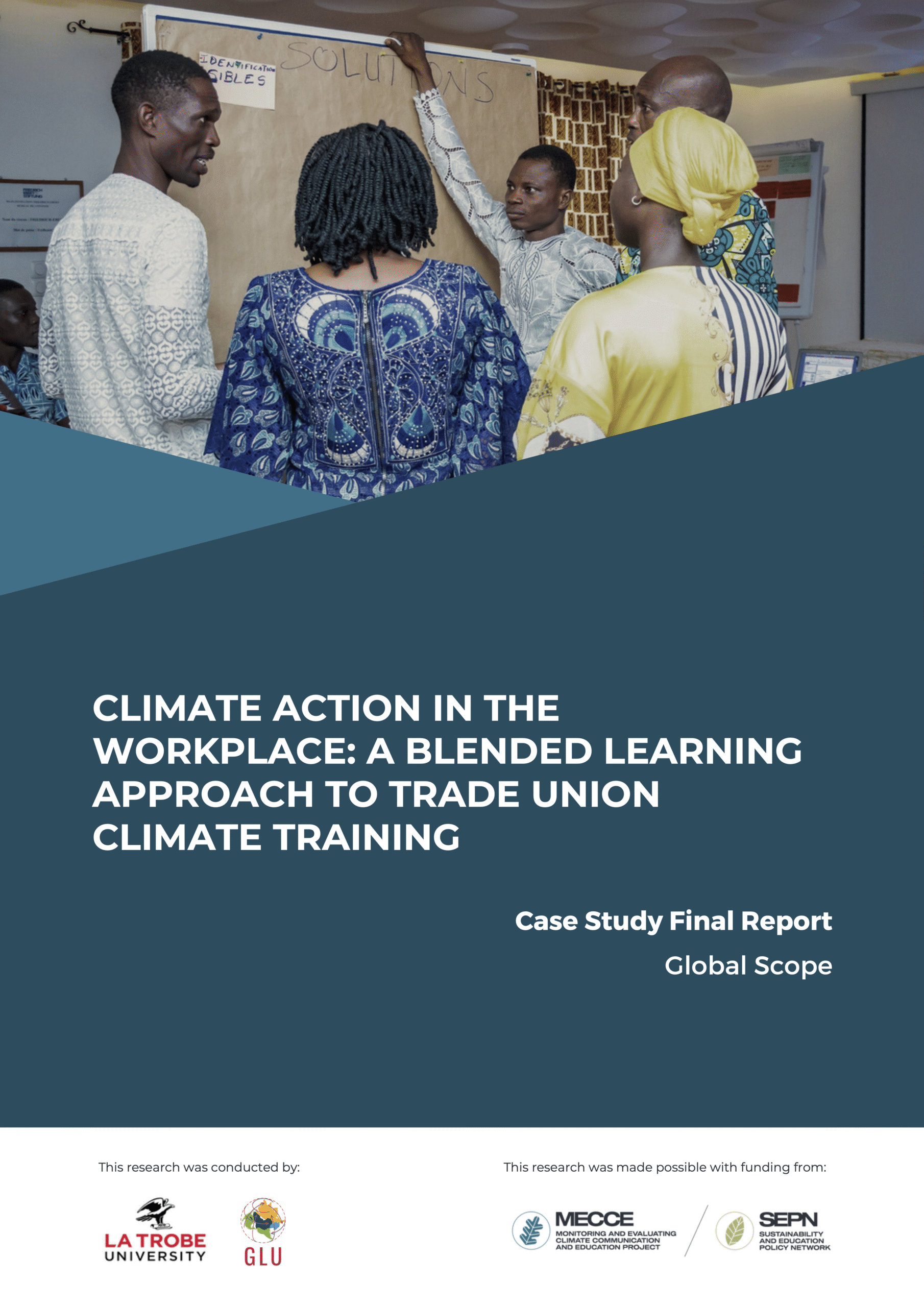
Just and Green: Labor’s Ecological Question is a free, open-access, online course offered by the Global Labour University (GLU). The course combines online learning with localised workshops delivered by the certified trainers of the GLU Online Academy.
Each trainer sets up a study circle of unionists, labour, and environmental and community activists, supports them in completing the online course, and develops tailored modules on the intersection between issues of climate change and labour, just transition, and environmental justice. The trainer then delivers these modules through localised workshops.
This case study focuses on a blended, emancipatory model of education developed by the Global Labour University (GLU) Online Academy.
The model uses spiral learning to move people from climate awareness to climate action.

The spiral learning model of education employed by the Just and Green course is a reiterative, highly participatory process. Trainers help participants connect their knowledge and lived experience, to the theoretical concepts and arguments of the course.
This serves to deepen participants’ understanding of the root causes of the environmental and climate crisis, and the power relations which sustain the status quo. The ultimate aim of the course is to facilitate local action towards just transitions and environmental justice.
"What we're trying to do is centre the learner in the process of the spiral and take them through a series of steps where we find out what they know, but also, we discover what they don't know. We find out what they don't know, to fill in more ideas to kind of scaffold it up. And then to have them end the course with concrete ideas of how they could apply them in the world." – Interviewee No.1
“I will not be there every time, but what I can do is to give them tools, material information, all kind of things that can empower them and they will be able by themselves to fight for the goodness… for the better life for the self.” – Interviewee No.6
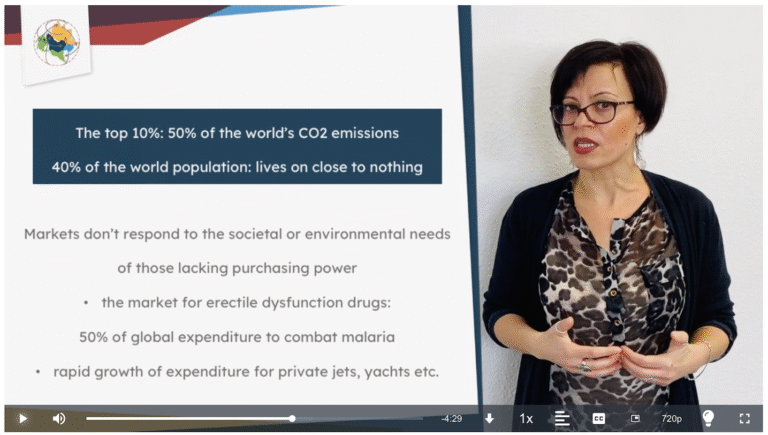
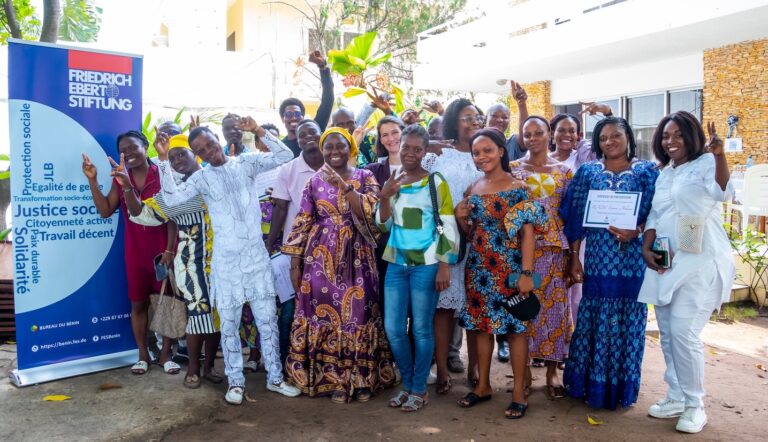
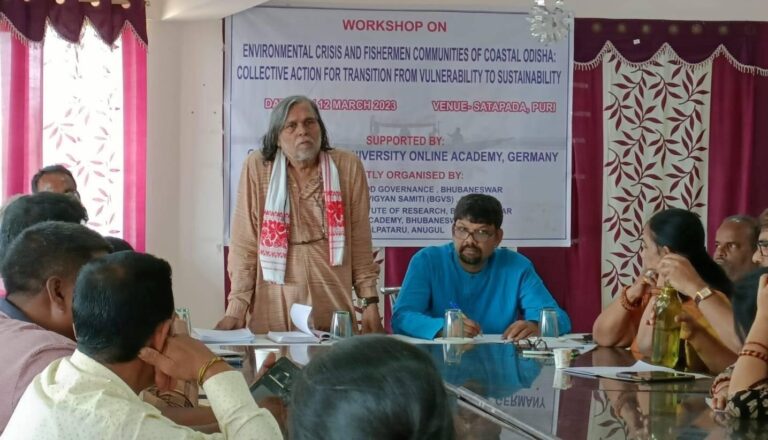
In total, 13 of the 16 trainers certified to lead the Just and Green course were interviewed for this case study, with representatives from Africa, Asia, and the Americas. The case study focused on trainers’ experiences in implementing their training, and how the training influenced their workplace climate actions, including advocacy for and the outcomes of climate action.
Trainers were asked interviewed to explore what they have learnt about climate change, sustainability, and labour, and how the blending of online training and local action has informed their activities with workers.
As a case study of quality climate change education and training, there are three notable aspects:
Linking to Local Contexts
Providing Inclusive Education Globally
Fostering Local Climate Action
The trainers begin by exploring participant knowledge and experience. This means that global education is linked to local contexts and needs for action. This approach is critical to recognising and validating workers’ knowledge and experiences, thus playing an important empowering role for working people and their communities. This is especially important in challenging the dominant approach of problem-solving where experts are brought in to find solutions to local problems, which often serves also to depoliticise issues.
The blended learning model provides inclusive education at a global scale through two major ways. First, the course’s open-source format allows activists across the world to study for free without any intermediate structure authorising access, which would be the common practice in trade union education. Second, trainers facilitate access to and translations for materials for workers who are outside formal education systems and who may not have the digital skills or technologies in place for online learning.
The case study provides many examples of how the course acts as driver for local climate change action. Many study circles continue to work together after the course ends to affect change in policy and their working and environmental conditions. Students and trainers are not only inspired to take individual action. The course instills a desire to pass on knowledge and experience to others. In this way, Just and Green impacts not just the participants, but also their communities.
Climate justice is at the heart of the case study. A central aspect of the course is the unmasking of power relations: both in society and in the classroom.
The course promotes justice by beginning with the knowledge of participants and addressing the aim of revealing and challenging power relations. Both of these are critical to empowering people who have been made to feel powerless and unable to make any change to their reality.
“I could see that there are very interesting experiences from workers all around the world that are putting like a break to those corporate abuses, and that's something that I've always felt like useless for climate change action, you know. Like OK, until they change their mind, we won't be able to do anything. And I learned that there are ways in which we can, like, act together and change things you know, like I never thought of that as something that we could work on.” – Interviewee No.2
“After the workshop, they go to the local government to know what is going on about climate change. When they make the research, they find that the local government are making policy about protection of environment, protection in the high area. They ask now to be part of the process because they plan to validate the policy program, and now they were able to participate on the different meetings.” – Interviewee No.6
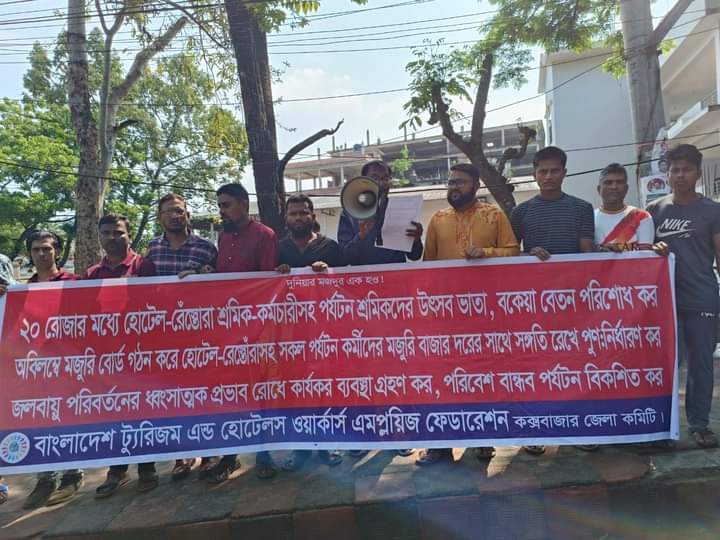
The connection between academia and the lived experiences of workers, mediated by the trainers, makes the Just and Green course broadly inclusive, socially and geographically, in ways that separate it from other examples of university-level climate education.
However, the limitation to this reach is also the foundation for its impact: the trainers. Trainers run study circles as volunteers, and having undergone training, provide their time and expertise in environment and employment without pay. In the interviews, trainers indicated that this is the main restriction in delivering blended interventions for the Just and Green course. At the same time the trainers acknowledge that use of this model also allows the Just and Green course to be offered without fees to students: it is both essential to the inclusivity and a restriction to greater inclusivity.
Through the work of the trainers, Just and Green provides a link between global theoretical and policy debates, socio-ecological transformations, and the people’s struggles for economic and environmental justice. Ultimately, the Just and Green case study has implications for how we consider education, and its role in responding to the climate crisis and the unjust working conditions that impact the health and well-being of many workers across the world.
“The training makes something move. I don't know if that gets into something concrete, but it moves us and that's something.” – Interviewee No.2
The MECCE Project is grateful to researchers at La Trobe University and Global Labour University for conducting this case study
WATCH PLACES, COMMUNITIES, STORIES
Quality climate communication and education fosters relationships with places, communities, and stories. Learn more in our popular video.