
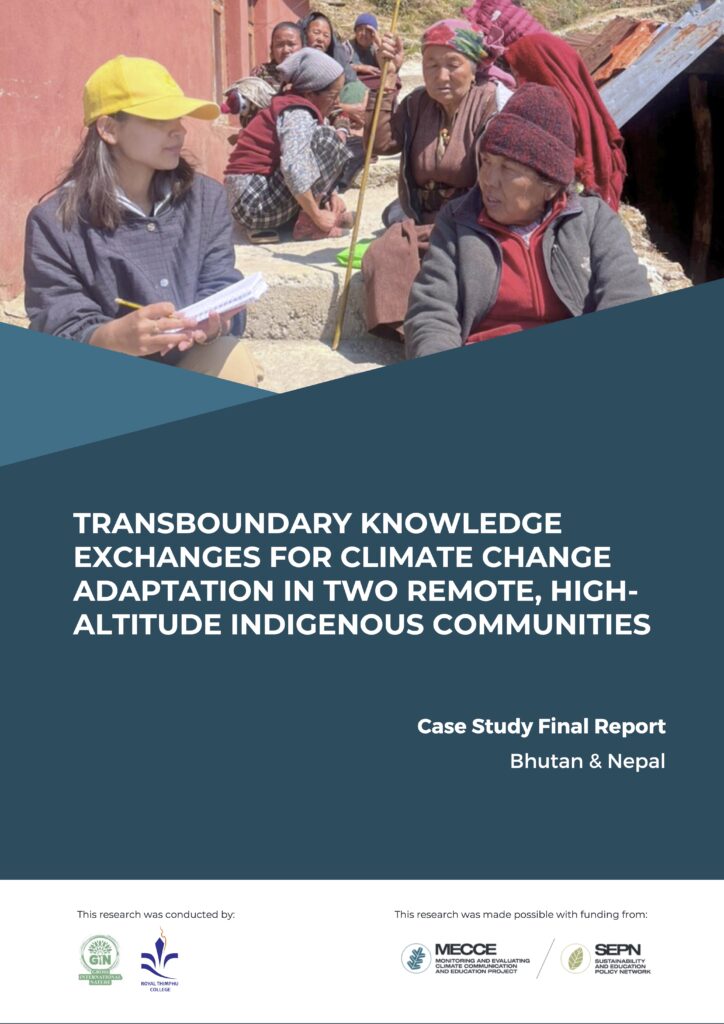
This case study explores the use of participatory Transboundary Knowledge Exchanges to raise awareness of climate change and foster tangible climate action within and between two Indigenous communities: Sermathang in Nepal and Merak in Bhutan.
Country: Bhutan & Nepal
CCE Types: Public Access to Information, Public Awareness, Public Participation
Transboundary Knowledge Exchanges for Climate Change Adaptation in two Remote, High-altitude Indigenous Communities
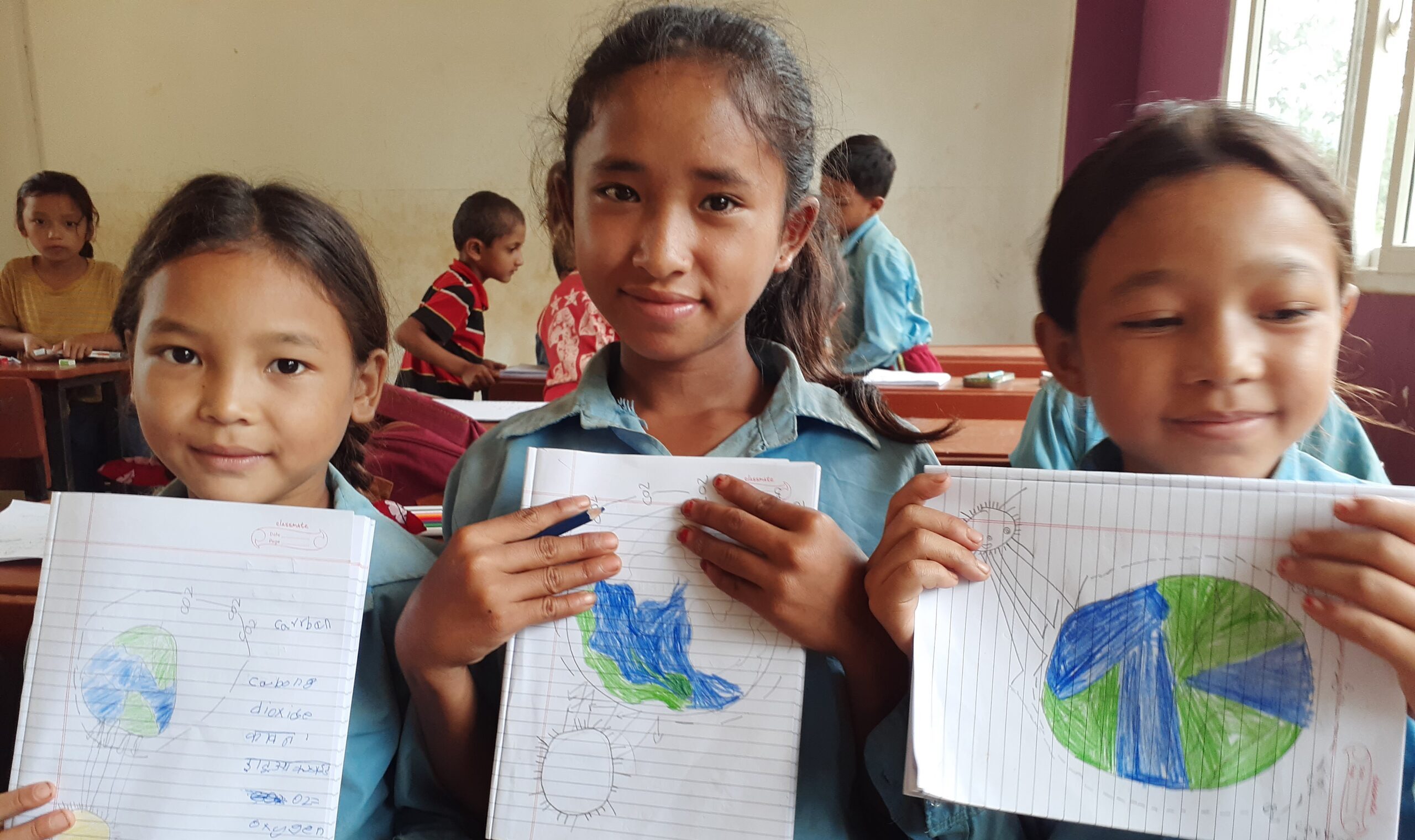
Sermathang, Nepal and Merak, Bhutan are among the most remote and climate vulnerable communities in the Hindu Kush Himalayan region. The two communities have similar climatic conditions, making them ideal for comparative analyses to improve existing knowledge and practices.
While the Hindu Kush Himalayan Region is engaged with locally-led adaptation knowledge and practices, there is a need to strengthen the involvement of the community and young people to ensure those practices are taken up.
This case study was led by two young activists from Bhutan and Nepal, who worked with the community to explore three questions:
1) What are the common understandings, lived experiences, and impacts of climate change held within the communities of Sermathang, Nepal and Merak, Bhutan?
2) How can locally relevant workshops effectively support locally-led climate adaptation practices to address the unique challenges faced within these communities?
3) How can cross-border knowledge exchange build young people’s capacity to act as climate changemakers?
Community members learned about climate change, its impacts, and solutions through a series of workshops on climate-resilient farming practices and documenting environmental changes. These workshops were tailored to the community’s lived experiences with climate change to support locally relevant climate adaptation actions. The workshops also helped link community members with local governments with the aim of developing locally relevant climate policies. Workshops were also held with students to teach them about climate change, local challenges due to climate change, and the role of young people in taking climate action.

Data were collected through a household survey, focus group discussions, key informant interviews, and community dialogues. In analyzing across these collected data, the case study reveals that both communities are being profoundly affected by the changing climate, despite community members having little to no prior understanding of the reasons behind the environmental shifts they were experiencing in their everyday lives. Water scarcity, agricultural challenges, and human-wildlife conflicts are among the common climate challenges faced by both communities. Further, community members in Bhutan shared that climate is impacting their livelihoods and health, as tourism declines and mosquito-borne diseases increase. The case study participants also expressed a wide range of emotions related to the impacts of climate change, particularly anxiety, guilt, and fear. Many community members believed that the changes they were experiencing were due to their misdeeds. This belief caused guilt, as they saw environmental degradation as a form of punishment.
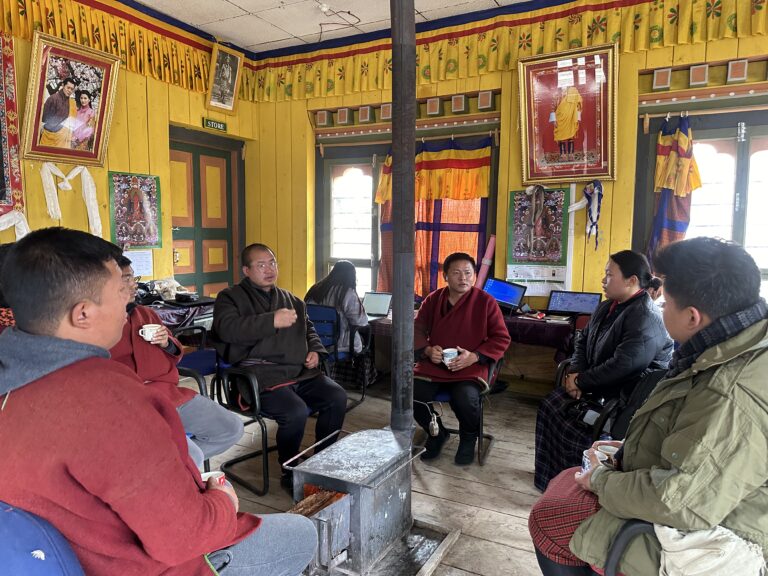
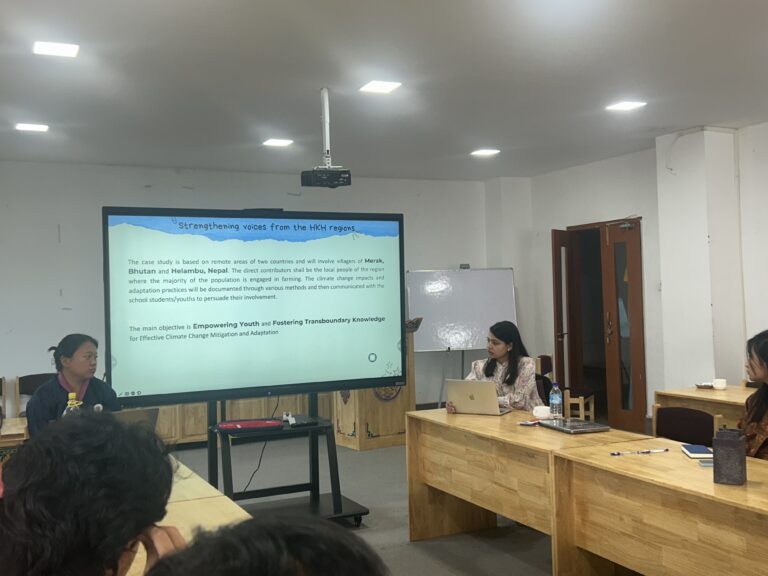
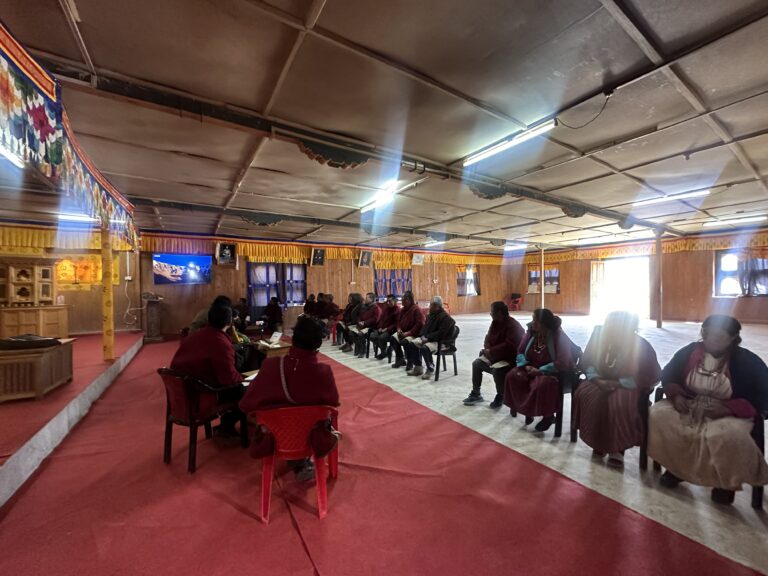
The case study also highlights the role of continuous dialogue in developing shared understandings of climate change, and in empowering locally relevant climate action. For example, the intergenerational dialogues allowed participants to explore the intersections of traditional knowledge and locally relevant climate adaptation practices. The youth dialogue session helped the students explore their unique identities as Indigenous people living in at the frontlines of the climate crisis and helped them understand ways to act as changemakers in their communities. The case study participants felt participating in the workshops and dialogues provided them with a sense of empowerment. Of particular importance was the framing climate change as a global issue rather than a local punishment, which helped replace fear and anxiety with the motivation to act.
The case study helped build a platform for transboundary collaboration between Nepal and Bhutan and the leveraging of case study data for policy impact. For example, both countries share a commitment to environmental protection but have different approaches to policy implementation, and the Transboundary Knowledge Exchanges facilitated learning across these borders. While both regions face similar climate impacts, such as reduced snowfall, Glacial Lake Outburst Floods, and human-wildlife conflict, the countries differs in their approaches to climate adaptation policy and practice. Bhutan’s focus on conservation and community-led environmental stewardship has offered valuable lessons for Nepal, while Nepal’s adaptive agricultural practices in high-altitude farming can be useful for Bhutanese farmers facing similar climate challenges. A key impact of the case study was the integration of community insights into Local Adaptation Plans of Action in both countries.
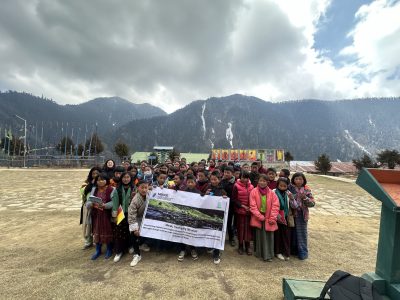
Underpinning the success of these activities was the collective commitment of the community members, whose dedication to aligning climate action with their spiritual beliefs and traditions played a vital role in ensuring engagement and acceptance of the Transboundary Knowledge Exchanges. This harmonious integration of local values with climate action not only strengthened community support but also ensured that climate actions taken within each community resonate deeply with their unique identities as Indigenous communities.
Ultimately, the case study acts as a testament to the importance of supporting communities on the frontlines of climate change to 1) better understand how climate change is impacting their lives and livelihoods, and 2) how to contribute to local level policy-making to ensure long-term climate resilience.
The MECCE Project is grateful to researchers at Gross International Nature and Royal Thimphy College for conducting this case study

WATCH PLACES, COMMUNITIES, STORIES
Quality climate communication and education fosters relationships with places, communities, and stories. Learn more in our popular video.